
Arctic-Sustainability
Immersion Trip
Please check back for updates for future trips.
Trip Overview
The Institute of Arctic Studies and the Dartmouth Sustainability Office have partnered to develop an annual immersive trip to explore local, and community-led sustainable transitions in Arctic countries. Each experience offers a rich learning environment through the location, resource availability, and cultural development.
Students will engage with different energy systems, local partners, the landscape, and educational institutes. The immersive nature of the trip will include outdoor activities and cross-country travel. Aspects of the trip will center around policy, science, community engagement, Indigenous Knowledge, and stewardship. We will meet with researchers, policymakers, sustainability enterprises, Indigenous Knowledgeholders, and commercial industry experts.
Iceland 2027
The Dartmouth Sustainability Office and the Institute of Arctic Studies are partnering to offer an immersive learning experience exploring sustainability, climate change, and Arctic futures in Iceland.
Iceland offers a compelling case study in sustainability. Its geography, abundant renewable energy resources, strong connections to the ocean, and rapidly changing tourism economy have shaped both the country’s development and its relationship with the natural world. At the same time, Iceland is navigating many of the challenges facing Arctic regions more broadly: a changing climate, shifting economies, increasing pressure on natural resources, and questions about how communities can adapt while maintaining cultural and ecological resilience.
Throughout the trip, we will ask: What does a sustainable future look like in the Arctic, and who gets to shape it? What can Iceland teach us about the opportunities and tensions involved in transitioning toward a more sustainable future?
Students will explore these questions through the lens of three major pillars of Iceland’s economy — energy, fisheries, and tourism — while also examining Arctic policy, governance, community planning, and climate adaptation.

What We’ll Explore
Based in both Reykjavík and Akureyri, students will learn directly from policymakers, planners, researchers, community leaders, industry professionals, and sustainability practitioners.
Experiences may include conversations with experts in Arctic governance and policy; visits with municipal leaders and town planners; tours of geothermal energy production, carbon capture initiatives, aluminum smelting, fish processing, and other industries; and discussions about how Iceland’s energy system influences both economic development and environmental decision-making.
We will also explore the role of fisheries in Icelandic culture and economy, including the impacts of climate change on marine ecosystems and coastal communities.
Tourism provides another important lens. As visitors ourselves, we will examine the opportunities and tensions created by Iceland’s rapidly growing tourism industry through visits with pools and spas, outdoor recreation providers, whale-watching operators, and communities balancing tourism, local needs, and environmental stewardship.
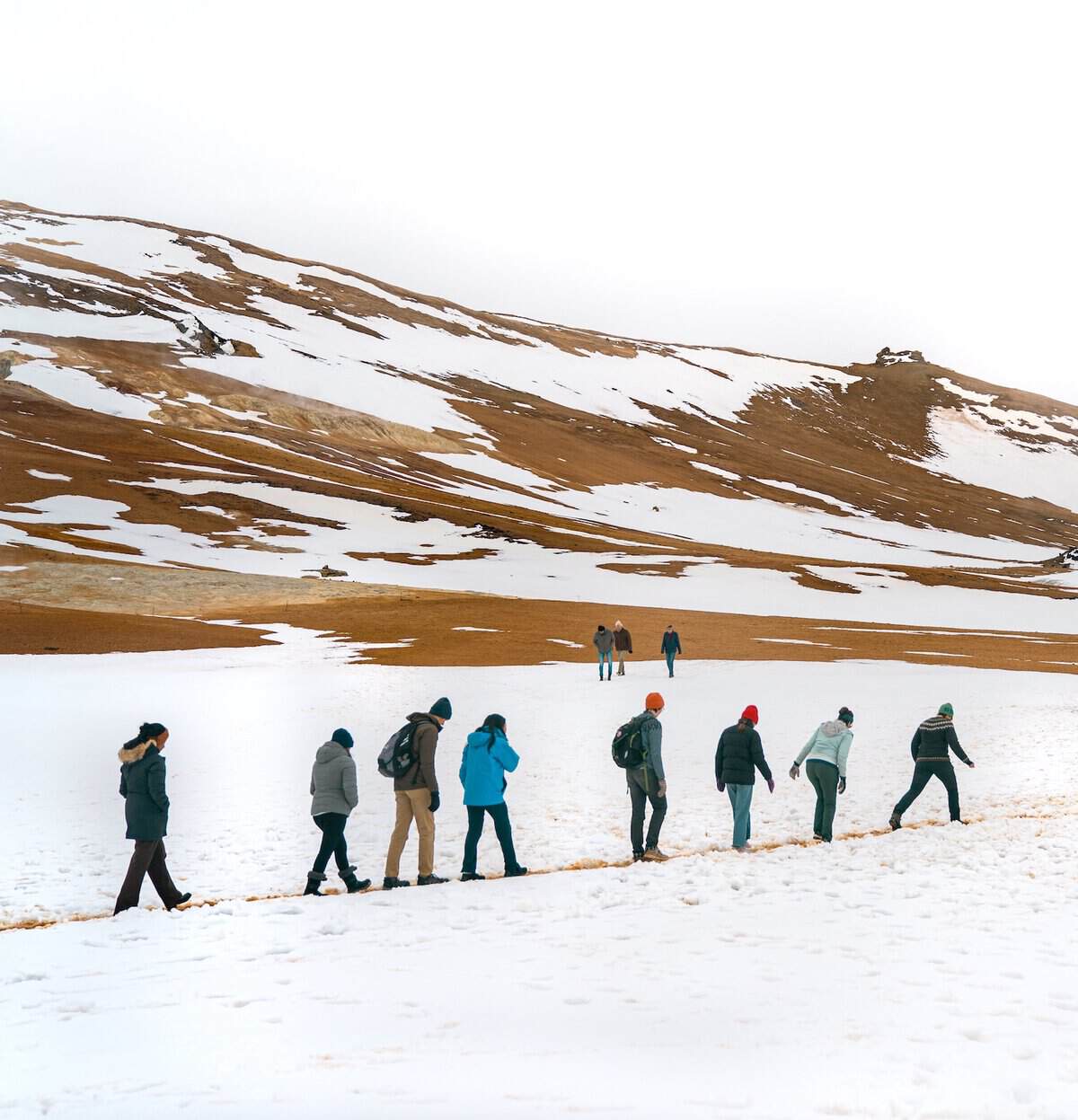
The trip is highly experiential and may include hiking, boat travel, outdoor recreation, site visits, and travel through Iceland’s dramatic landscapes. Students should expect full days, changing weather, and plenty of time spent learning outside of a traditional classroom.
Who Should Apply
Participants should be:
-
Curious, engaged, and self-motivated learners
-
Interested in sustainability, Arctic studies, climate change, policy, or related fields
-
Excited to learn through direct experience and conversation
-
Comfortable contributing to group discussion and reflection
-
Able to work cooperatively with a diverse group
-
Flexible and willing to adapt to unfamiliar or sometimes challenging situations
-
Ready for an active trip that includes outdoor activities, boat travel, and extended periods of travel
Eligibility
-
Be on campus during 27W term in order to attend the required pre-trip education sessions in person
-
Have previously participated in either the Arctic Innovation Scholars Program or a Sustainability Office program, such as the Sustainability Action Program, Climate Scholars, internships, the Sustainable Living Center, or other related programming
- Students must have a valid US Passport, or if you are an international student, you must have appropriate visas to travel to Finland. Please check with the OVIS office representatives if you need help determining this, or reach out to TraVisa, and mention you’re a Dartmouth student. Visa costs will be covered for selected candidates.
- Be aware that travel takes place during spring break.

Cost
An estimated $250 covers all travel expenses, programming, housing, and food for the entire duration of the trip. Need-based financial aid is available up to 100%. We work to grant aid in partnership with the Financial Aid Office after acceptance on the trip.
Be a Trip Leader
The Arctic-Sustainability Immersion Trip team is seeking student trip leaders. Applications are due November 15th by 11:59 pm. If you would like to apply to be a trip leader, simply check the box at the end of the regular application. If you are not selected as a leader, your application will be considered in the pool of trip attendees.
We are seeking leaders from diverse backgrounds and with a range of extracurricular and academic interests who are currently undergraduates at Dartmouth. Previous involvement with sustainability, energy systems, earth sciences, health, or environmental justice work is not required. Ideal leaders will:
- Be willing, ready, and excited to learn about sustainability in the Arctic from multiple perspectives and through various social, economic, and political lenses
- Be flexible, willing to go with the flow, and able to consider and advocate for your own needs and the needs of the group
- Be emotionally present and open-minded to hearing different points of view and having dialogue across difference
- Be very responsible with decision making and create an exciting and welcoming atmosphere for trip participants
How to Apply
Applications are due Sunday, November 15 by 11:59 PM.
Staff Contacts
2027 Arctic-Sustainability Energy Immersion Trip
Laura Braasch | Assistant Director | Dartmouth Sustainability Office | Laura.M.Braasch@dartmouth.edu
2028 Arctic & Native American Programs Immersion Trip
Sanaa Siddiqi | Arctic Program Manager | Institute of Arctic Studies | Sanaa.K.Siddiqi@dartmouth.edu