
Partnered Internships
The Institute of Arctic Studies offers internship opportunities through institutions, organizations, and trusted partners. These opportunities are updated depending on availability, or as new partnered internships become available.
Please read through the General Internship Information before applying.

ILLU Art and Science Hub in Greenland
The University of Bergen has partnered with the ClimateNarratives project and Avannaata Kommunia to create the ILLU Art and Science Hub in Illulissat, Greenland. Interns will assist in organizing dissemination events and community outreach initiatives, while being able to network with artists and scientists from diverse backgrounds.
This internship is available for the Spring, Summer, and Fall terms. Deadlines will be updated periodically here.
Ethical Guidelines for Participation
ILLU collaborators, residents, and interns are expected to adhere to a set of ethical guidelines during their stay. From the ILLU Instruction Manual:
Conducting research with the local communities of Greenland requires an appreciation of their culture, history, and perspectives. The following guidelines can help ensure that your research is culturally responsive and ethical:
Obtain informed consent: Prior to starting your research, it is important to gain the informed consent of the people you plan to work with. This means that they have a clear understanding of the purpose and scope of your research and have voluntarily agreed to participate.
Be culturally sensitive: Be conscious of cultural differences and the local unique history and experiences. Research should not reinforce stereotypes or colonial attitudes.
Foster open communication: Foster open communication and maintain transparent and honest relationships with the communities you work with. Listen to their perspectives, and incorporate their feedback and suggestions into your research process.
Respect sacred and sensitive information: Handle sacred or sensitive information with respect, and do not disclose or use it without the permission.
Ensure data privacy and security: Take steps to protect the personal data and information collected during your research and ensure its security.
Work with community partners: Consider collaborating with community partners, such as local organizations, to facilitate your research and ensure its cultural responsiveness.
Give back to the community: Consider ways to give back to the community, such as sharing your research findings with them or supporting community development initiatives.
Acknowledge and respect traditional knowledge: Acknowledge and respect the traditional knowledge and perspectives of Indigenous Peoples of Greenland, and integrate them into your research where appropriate.
Dartmouth-University of Alaska Southeast: Engaging Indigenous Knowledge in Alaska Marine Policy Making
Climate change is causing shifts and variability in social-ecological systems. To prepare, federal and state leaders have directed policy makers to consider Indigenous knowledge in their decision making. However, the steps policy makers should take to engage Indigenous knowledge remain unclear.
To fill this gap, this project seeks to answer this question: How do existing federal and state regulatory processes inhibit, or facilitate, policy makers’ abilities to use Indigenous knowledge to inform their decision making?
This internship is available throughout the whole academic year.
Project Overview
To answer the question, the project team will be interviewing current and former marine policy makers to understand their perspectives on processes that facilitate, or inhibit, their abilities to engage Indigenous knowledge in decision making. The team will also examine how policy makers, Tribal representatives, and other stakeholders discuss Indigenous Knowledge in public policy making meetings.
The selected intern will work with the project team to analyze interviews using qualitative coding software. Students will be invited to participate in project publications and in presentations of project results to policy makers and Alaska Native organizations.
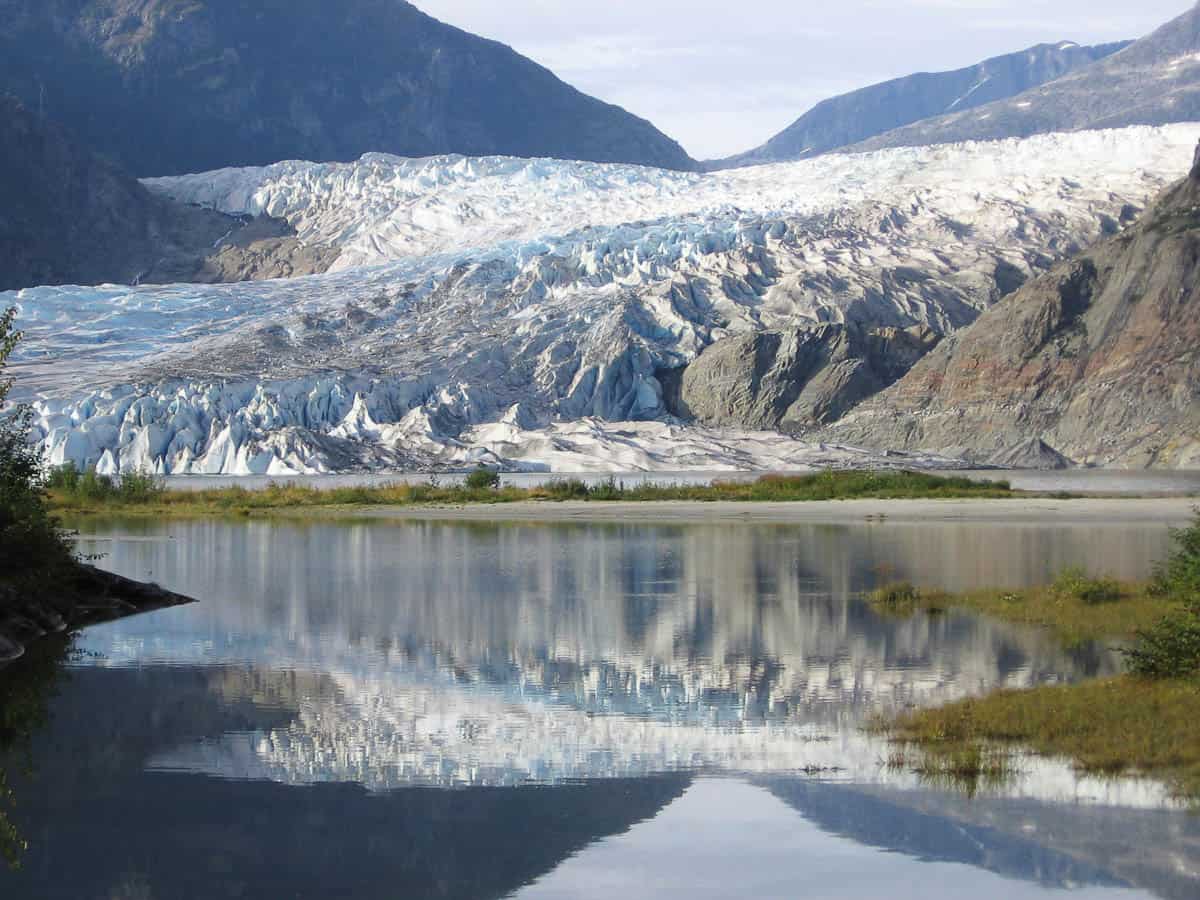
Housing arrangements may be available through the University of Alaska Southeast in Juneau. Juneau is Alaska’s capital city and a central hub for policy making and research.

Dartmouth-Arctic Center for Energy and Power in Fairbanks, Alaska
Project Overview
The Alaska Center for Energy and Power (ACEP) fosters innovative solutions to Alaska’s energy challenges and is a gateway for energy-related activity at the University of Alaska Fairbanks.
This internship is expected to be available for students for a leave term, year-round.
Winter 2027 Opportunity
There are five internship openings for Winter 2027.
They are:
- Alaska Policy Internship
- The Alaska Cross-Climate Calculator for Electric Loads (AxCCEL) Framework
- Triple-Energy Security in Alaska
- Alaska Energy Program Analysis
- Hydrokenetic Internship
Details
Alaska Policy Internship
The Alaska Center for Energy and Power invites Dartmouth students from any academic discipline to participate in a 10-week term policy internship focused on immediate and emerging issues facing Alaska. Each intern will be paired with faculty or staff to develop a tailored project that reflects the student’s interests, skills, and academic background while addressing a specific, near-term policy need.
Although the internship is hosted by an energy research center, projects may be multidisciplinary and could involve economics, engineering, environmental science, public policy, public health, Indigenous studies, data analysis, communications, or other fields relevant to Alaska and the Arctic. In addition to completing a substantive policy project, interns will gain firsthand exposure to Alaska’s policymaking and policy landscape through meetings with elected officials and other community leaders, as well as tours of local energy projects and cultural and historic sites. The program is intended to give students a practical understanding of how research and analysis can inform real-world policy decisions in a complex and rapidly changing environment.
Internship contact: Please reach out to Gwen Holdmann gwen.holdmann@alaska.edu for questions specific to this opportunity. For questions regarding the internship application process, contact sanaa.k.siddqi@dartmouth.edu.
The Alaska Cross-Climate Calculator for Electric Loads (AxCCEL) Framework
Alaska has 13 climate zones, from the rainy Southeast to the Arctic tundra. These zones differ in precipitation, temperature and seasonality. Humans in these regions have diverse cultural practices adapted to their location. Because of these differences, it is important to build appropriate infrastructure suited to the environment.
Electrical load estimation is used in planning for the energy system; however, no tool currently exists to do this projection for 12 of the 13 climate zones. We are working on the Alaska Cross Climate Calculator for Electric Loads (AxCCEL) to address this need.
Tools already exist for projecting load; however, the methodologies have not been combined to build models specific to each climatic zone. This internship project will integrate climatic and infrastructural characteristics of communities in each climatic zone to create a load calculator for each region. This tool will be used by researchers and planners to better understand energy needs for Alaska communities.
Prerequisite for The Alaska Cross-Climate Calculator: Students must have taken Calculus 1 or Math 10 for this opportunity.
Internship Contact: Please contact Bax Bond at bwbond@alaska.edu and Emilia Hernandez eshernandez2@alaska.edu for the information regarding the AxCCEL Framework. For questions regarding the internship process, contact sanaa.k.siddiqi@dartmouth.edu.
Triple-Use Energy Security in Alaska: Balancing Community, Economic, and Strategic
Mentor: Magnus De Witt, Vanessa Raymond
Key Themes: energy security; triple use; dual use
Background: The triple-use concept can be used in the context of strategically important U.S. regions such as Alaska. Instead of defining infrastructure through a dual-use lens (defense and civilian), projects can be evaluated according to three complementary objectives: military and national security; national strategic and economic interests; community energy security. Rather than viewing energy infrastructure as simply dual-use, this framework argues that strategic infrastructure should simultaneously strengthen military resilience, national strategic resilience, and community energy security. It integrates concepts from national security, energy security, and human security, shifting the central question from “Is this project strategically important?” to “For whom is this infrastructure secure?” This provides a framework for evaluating infrastructure investments in strategically important regions such as Alaska while addressing energy justice, public acceptance, and long-term resilience.
Project: This project will create a Triple-Use Energy Index to evaluate how energy infrastructure efforts can simultaneously enhance community energy security, economic resilience, and national strategic interests in Alaska. Alaska is increasingly at the forefront of global competition and growing strategic interest, which puts more emphasis on resilient and reliable energy systems. This project will develop an indicator framework that measures the triple-use value of energy systems and apply it to selected Alaskan case studies. Assessing the extent to which energy investments generate mutual benefits across local, economic, and strategic dimensions. How does it shape the need for energy security, and to what extent can triple use help strengthen mutual interests?
Internship contact: Please reach out to Magnus De Witt mdewitt9@alaska.edu for questions specific to this opportunity.
Alaska Energy Program Analysis Internship
Objective : Identify how existing statewide energy policies and programs can be adapted to be more equitable and effective.
Background. There are energy inequities between the urban and rural areas of Alaska regarding energy availability, price, and use. Well-crafted energy policies can help reduce energy inequality through reducing energy prices, fostering renewable energy project development, and improving the energy efficiency of the building stock. Alaska’s energy policies need to be examined to assess how equitable they currently are and how they can be made more equitable and effective at serving rural populations in the future.
Proposed Work. The project will examine the Power Cost Equalization program, the Renewable Energy Fund, the Alaska Weatherization program, and the Home Energy Rebate program. For each program, we will identify how funds have been allocated between urban and rural areas historically, the program’s stream of benefits, and how the program can be adapted to promote energy access, price, and consumption parity between urban and rural areas.
Internship contact: Please reach out to Dominique Pride djpride@alaska.edu for questions specific to this opportunity.
Hydrokenetic Internship
being conducted on Galena, AK, for multibeam survey, drone mapping, and Acoustic Doppler Current Profiler data.
In addition they would collaborate with a training of a neural network by identifying debris in pictures.
A proof of concept of this neural network has already been tested successfully.
Internship contact: Please reach out to Paul Duvoy pxduvoy@alaska.edu for questions specific to this opportunity.
Partner-Facilitated Internships
The Institute of Arctic Studies engages with a range of other partners that may have opportunities depending on organisational availability or need at the time. Please inquire with us directly as to the availability of these other opportunities.
Iceland Arctic Cooperation Network (IACN)
The Icelandic Arctic Cooperation Network (IACN) has partnered with the Institute of Arctic Studies to support students interested in networking in the Arctic, building connections through partnered organizations, and facilitating collaborative projects between different groups.
General Internship Information
The below applies to all of the offered partnered internships.
DURATION: 8-10 weeks
ELIGIBILITY: To be eligible for funding, you must have an “L term” (Leave Term) status with the College.
ITEMS TO SUBMIT WITH YOUR ONLINE APPLICATION
You are required to submit a resume/CV and unofficial transcript with your application at the time of submission. These are uploaded directly into the application.
Budget
- Standard funding available for travel-based internships is $6,000. If expenses are higher than the standard award amount please specify and articulate where additional funds are needed. Consideration will be given on a case-by-case basis. Please provide detail in the budget outline.
Resume or CV
- Please submit a current resume or CV.
Supervisor Statement
- Required for other internships, but not for partnered internships. Applicants must ask their host organizations to complete the Supervisor Statement, which verifies your offer of internship and includes a description of the work to be completed.
Recommendation(s)
Requests for recommendations are made directly through the application link. Please begin your application and use the links provided to invite recommenders to complete an online form
- One recommendation must come from a Dartmouth faculty member
- A second recommendation is suggested, but not required. Secondary recommendations can come from previous employers, advisors, staff, or an additional faculty member.
Writing Sample:
- This should be a research paper, opinion piece, newsletter article, narrative paper, blog post or creative essay that demonstrates your writing/research skills. Sample should be 1-3 pages in length.
Applications missing the above elements will be considered incomplete.
For more information on Dartmouth’s Travel Safety Policy, Travel Registry, and Exception process, please visit the Global Dartmouth website here.
Post-Travel Requirements
Returning interns agree to participate in workshops or informational sessions related to internships. Following completion of the internship, students are required to submit a 3-5 page report describing not only the kind of work done, but also something about the organizational host, the people with whom the intern worked, and how the experience was meaningful.
How to Apply
Deadline for Winter ’26 internships is October 21 at 11:59 PM.
The application link will take you to a generic Arctic Partnered Internships portal. Please indicate whichever internship you’re applying for within the application.
Questions?
Reach out to Sanaa Siddiqi
(Banner photo: Arctic Innovation Scholar, Aidan Silvestro ’27)